Yemen’s Muhamasheen—estimated by the UN to number up to 3.5 million and of Sub-Saharan ancestry—have long been marginalized, facing nearly a millennium of caste-like ostracization, stigmatization, and a refusal to acknowledge their basic human dignity. Widely called “Akhdam” (“servants”), myths trace their origins to Abyssinian occupiers of Yemen in the sixth century. Yet ethnic markers and traces of Swahili in this Arabic-speaking population point to a later date and the East African slave trade. Others – including among the Muhamasheen – look to the overthrow and subjugation of the Najahid dynasty ruled by Ethiopian mamluks in the 12th century, seeing the subsequent treatment of the defeated as the origin of their current dismal status.
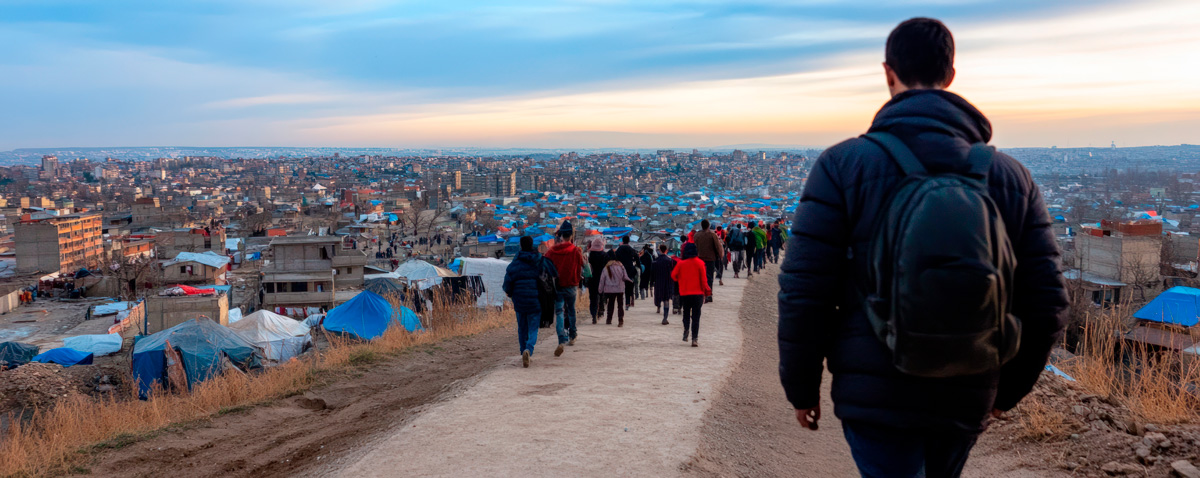
That entrenched and harsh caste-like exclusion across nearly all aspects of life and the Muhamasheen’s precarity is also highlighted by their lack of tribal affiliations in a country where this matters. They are generally confined to menial and stigmatized jobs such as garbage collection, shoe-shining, or street cleaning. Many, often women and children, turn to begging. Their settlements are to be found on the outskirts of cities in slum areas with makeshift shelters and limited access to water, sanitation, education, and healthcare.
The Muhamasheen and their local allies have long struggled against their harsh treatment. The most substantial state effort was Socialist South Yemen’s reforms to redress entrenched social inequalities, including the Muhamasheen. These efforts ended with reunification and the 1994 civil war. Yet the struggle for Muhamasheen rights continued and by 2007 there were some 80 organizations pushing for greater recognition but progress was slow. At the National Dialogue Conference (2013-2014), a follow-up to the 2011 uprising against President Saleh, the Muhamasheen managed to secure only one of 565 delegate seats. The 2015 civil war would deal a blow to this struggle as the whole country descended into a maelstrom of conflict. The resultant fragmentation would also be reflected in organizations struggling for Muhamasheen rights.
Yemen, now in its eleventh year of civil war, remains one of the world’s worst humanitarian catastrophes. The UN says that in 2026 some 22 million Yemenis, over half the population of 43 million will need humanitarian assistance and protection. This includes 5.2 million internally displaced persons (IDPs), 329,000 migrants and 63,000 refugees and asylum seekers. Over 2.2 million children under five are acutely malnourished as are 1.3 million pregnant and breastfeeding women. Some 16 million people, including 8.47 million children, urgently need water, sanitation and hygiene (WASH) assistance to reduce disease, malnutrition and other life-threatening risks. Only 59.3 percent of health facilities are functional, while full vaccination coverage is just 63 percent amid high levels of epidemic diseases. Some 18.3 million people are acutely food insecure, with conditions worsening significantly in 2026 as more districts shift to emergency levels with catastrophic levels among fragile communities.
Perhaps the most fragile and marginalized of these communities are Yemen’s Muhamasheen which are often excluded from aid programs due to pressure from local populations and IDPs competing for aid resources. They also often lack the documentation and connections needed to access aid and governmental support whether from the Houthis or the IRG.
In 2014, just before the 2015 civil war, UNICEF with the Social Welfare Fund and other agencies undertook the Muhamasheen Mapping Survey of over 9,000 households (51,000 people) in Taiz. This survey was to be a baseline and repeated in two years. That never happened but it did bring out the sharp disparities between the Muhamasheen and the general population.
The Muhamasheen had an adult literacy rate of 20 percent versus 60 percent for the general population. For children’s literacy (10-14 years) the rates were 48 percent versus 83 percent and for youth literacy (15-24 years) 33 percent against 77 percent. Many children also face bullying and harassment in school, including from teachers, attendance suffers and eventually they end up dropping out. Undercoverage of the Muhamasheen in the government’s social protection cash transfer program was at 80 percent versus 46 percent for the general population. Only 9 percent of Muhamasheen homes had piped water versus 29 percent for the general population, over twice as many in the general population had mobile phones while only 6 percent of the Muhamasheen owned a refrigerator versus 30 percent for the general population.
The war has only worsened these numbers and opened new challenges for the community. Indeed as poverty spread throughout the population, the Muhamasheen are even being displaced from their long-denigrated menial jobs. The Government’s Cleaning and Improvement Fund, which employed many Muhamasheen as garbage collectors, is now increasingly hiring locals, IDPs and others. Furthermore, Muhamasheen from Aden, Hudaydah and Taiz struggled to access IDP camps or shelter in public institutions such as schools due to pushback from other IDPs. Moving into public areas like parks also brings with it opposition from local populations, often resulting in displacement and, at times, violent evictions.
The civil war with its variety of militias and armed groups has also meant that many young Yemeni and Muhamasheen men (and children) have either been forcefully recruited or turned to soldiering to escape poverty and help their families. Exact numbers are unclear but with numerous militias paid for by the Houthis, the Internationally Recognized Government (IRG), the Saudis and the UAE there are many willing recruiters. Exact numbers are hard to come by, but estimates of such recruits are in the thousands. Those returning after two or three years of fighting with enough money to open a business and buy or construct a substantial house incentivize others to follow in their steps. For the Muhamasheen the ability to open a business and buy a proper house also acts as one of the few ways to escape their lowly status.
Indeed, many in Yemen, including among the Muhamasheen have ended up in Russia fighting against Ukraine. Lured by promises of thousands of dollars in upfront bonuses, high monthly wages and Russian citizenship, many have chosen that route – despite the high casualty rate. Often these promises turn out to be highly exaggerated and others recruited for ostensibly civilian jobs find themselves on the frontlines. These recruitments are part of an organized transnational network that has links to the Houthis and plays a part in the growing ties between the Houthis and Russia in the context of the Iran war.
In the meantime, Yemeni demand for fighters, voluntary or otherwise is unlikely to slow even as the civil war continues to take its horrendous toll. There is now renewed intense fighting as the Houthis, in a move to put pressure on Saudi Arabia and its oil exports, move towards the Bab El Mandeb strait held on by the IRG. The situation for all Yemenis in the affected regions, including the Muhamasheen, is likely to worsen measurably.
Dealing with the Muhamasheen challenge is a monumental task in the best of times, in the context of conflict and fragmentation it can seem overwhelming. Yet there are fairly broad yet solid recommendations that have emerged from within Yemen. This includes The Peace Track Initiative (PTI), a Yemeni women-led group that promotes the inclusion of women and marginalized groups in peace and political processes. In 2025, PTI issued a report together with its author Nader Al-Sakkaf which tackles the challenges facing not only the Muhamasheen but also minorities like the Bahai and Christians, including measures to be taken during the conflict phase.
Categorized as “Urgent (During Conflict)” these include lessons from Afghanistan focused on establishing district level consultative councils with seats reserved for marginalized groups based on the evaluation that political reforms at the national level are not currently possible. The leverage sought here is to use donor coordination in establishing these councils. Also recommended is to require humanitarian donors to incorporate minority representatives into aid planning to avoid exclusion in IDP camps and informal settlements. This is indeed a measure that can be acted on almost immediately. Also suggested is using the Rwanda example to set up media and education campaigns against discrimination, with local leaders and influencers brought on board.
Also included are medium- and longer-term programs and projects to fight against marginalization and discrimination focused on political and legal reforms and measures for ensuring equal access to services. The Sana’a Center for Strategic Studies also has put forward political and legal measures supporting the Muhamasheen, including the use of quotas for inclusion in various bodies, as well as a focus on getting donors to insist on the inclusion of the Muhamasheen in their programs by linking with their organizations in a systematic manner.
Certainly the low hanging fruit here are the donors. Among others UNICEF and the World Bank have had programs that explicitly included the Muhamasheen but given the pressing needs and the severe victimization of this beleaguered community more needs to be done. A coordinated and focused effort would be welcome. This would include involving local Yemeni communities that have to see benefits spread to them as well to prevent further animosities and exclusion of the Muhamasheen. This is a lesson donors have learned well from dealing with refugee inflows into countries ranging from Lebanon, Turkey, Syria and others.
However, as the Yemen Peace Forum noted in December 2025 “As international support for Yemen recedes, the plight of the Muhamasheen is once again being relegated to the margins, leaving the community increasingly vulnerable”. This should be unacceptable to all. If a peaceful and prosperous Yemen is to be rebuilt, how well the Muhamasheen are integrated into such a project should be a bell weather for the process as a whole.