In the year since the ouster of the Assad regime, Syrians remain mostly hopeful having thrown out a brutal dictatorship, secured US, European, Regional and Russian recognition with sanctions removed in rapid manner, including the draconian Ceasar Act. That sense of hope, however, does not appear to extend widely to minorities such as the Kurds, Druze, Alawites and others. Furthermore, the country remains in dire humanitarian straits, economically destitute, and grappling with intricate and evolving social and political challenges.
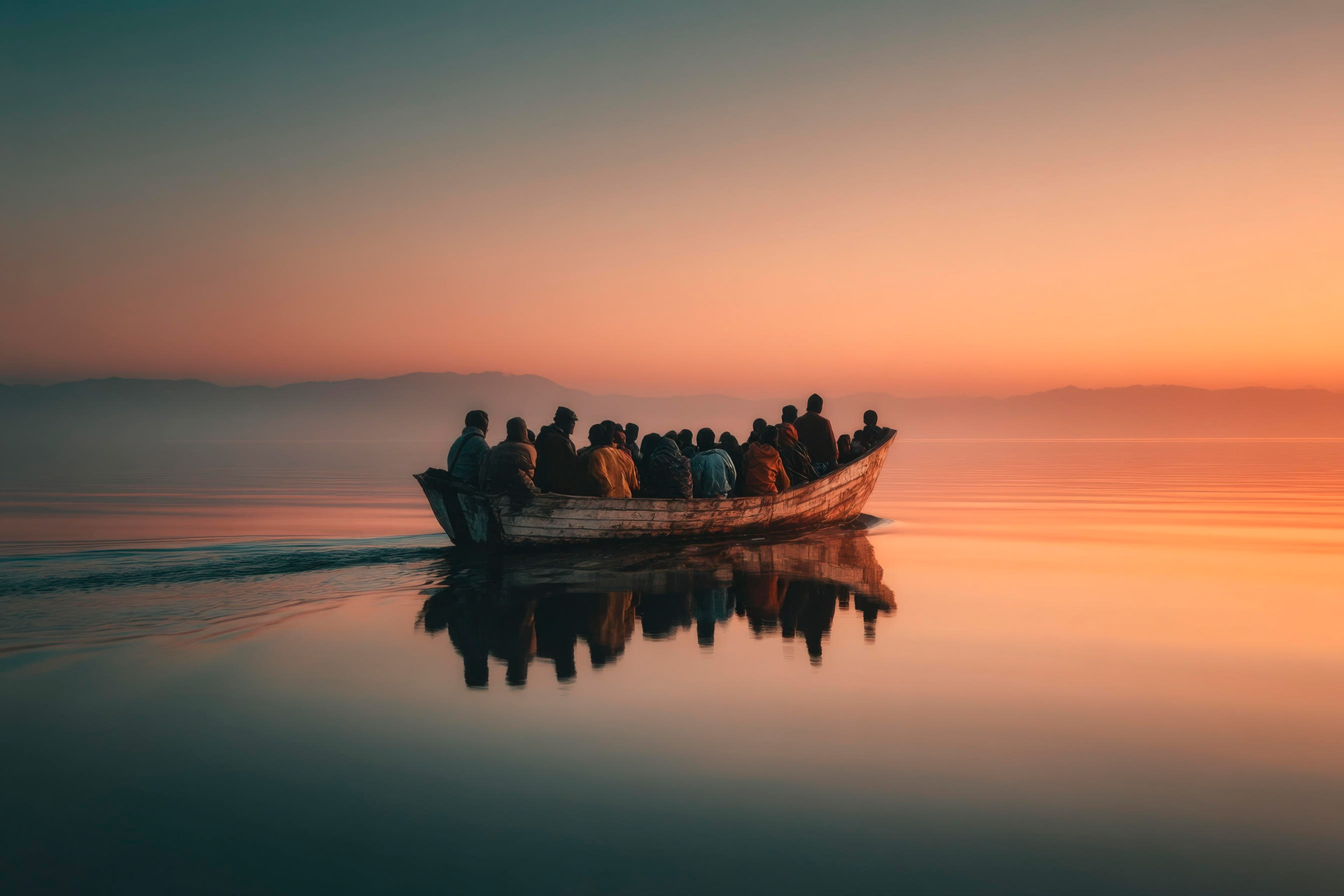
Illustrative of these multifaceted challenges are the complexities around the return of the country’s forcibly displaced. Currently at 13 million and corresponding to roughly half the population these are numbers that rival the 15 million displaced during the 1947 partition of British India and the 14 million forcibly displaced in Sudan’s current civil war. As of June 2025, these included 4.4 million refugees in neighboring Jordan, Lebanon and Turkey, a further 450,000 in Egypt and Iraq, 1.4 million in Europe, as well as 7.4 million Internally Displaced Peoples (IDPs).
In Syria itself some 16.5 million, 70 percent of the population, are in dire need of humanitarian assistance and 90 percent of the population are living in poverty. Furthermore over 9 million are acutely food insecure with 7.4 million children in need of assistance and one in four out of school.
Yet, despite security concerns, significant livelihood challenges and severe shortages of electricity, water, housing, schooling, and health care the UNHCR says over 3 million Syrians, 1.2 million refugees and 1.9 million IDPs, have returned home. Of these 170,000 have come from Jordan, 379,000 from Lebanon, and 560,000 from Turkey. A further 28,000 have come from Egypt and fewer from Iraq where most Syrian refugees are Kurds. UNHCR considers these voluntary returns, aiding with transport, some cash grants and basic relief items to many in the process. Conspicuous by their absence from these numbers are Syrian refugees residing in Europe, at least for now.
Pull and Push Factors in Refugee Returns:
The UNCHR underlines that the return of the forcibly displaced is a major step in Syria’s healing process. Forced displacement caused by the civil war was among the deepest felt grievances and the return of these millions is viewed as crucial to putting an end to years of suffering and enabling a stable and peaceful Syria. Returns are also critical for easing tensions in host countries as the welcome extended to refugees, where it existed, has long faded. Indeed, the lure of home remains strong for exiled Syrians. UNHCR surveys from January 2025 in Jordan, Lebanon, Iraq and Egypt found that 80% of Syrian refugees hoped to return home – up sharply from 57% the previous year.
The pull factors explaining the return of refugees are varied but identifiable. The fall of the regime brought with it immense relief and a significant change in risk calculations. Also important are the emotional pull of one’s native land, a longing for identity, family reunification, and the pull of assets held in Syria. For many it was also important to participate in the reconstruction of the country, underlining the critical role that the Syrian diaspora will play in the recovery. However, returns, even if in smaller numbers had started before the fall of the regime and had much to do with push factors in hosting countries.
In Lebanon, the large numbers of overwhelmingly Sunni Syrian refugees triggered fears of upending a delicate confessional balance. Unsettling the country from the very beginning of refugee flows, this led to increasingly restrictive policies and deteriorating living conditions exacerbated by a massive economic crisis in 2019 increasing the pressure on Syrian refugees to return. More than half are living in extreme poverty with over three quarters living below the poverty line. Another massive push came with Israel’s onslaught on Lebanon when some 250,000 refugees returned home.
In Turkey too, the welcome faded as Turkey’s mismanaged economy went into crisis in 2018. Whereas a poll in 2016 showed 72 percent had no problems with refugees, by 2019 80 percent wished for their repatriation. Long a political football during elections, Syrian refugees have also seen occasional bouts of communal violence and have also suffered under the prolonged economic downturn. In 2022 over 64 percent of urban Syrian refugee households lived at or below the poverty line and these numbers have likely worsened over the years.
In Jordan, tensions with the local population have been less than in Lebanon and Turkey. A segmented labor market where Syrian refugees mostly compete for jobs with migrant laborers from Egypt, Sudan, and elsewhere likely helped in lessening local resentment. However, with flagging donor assistance, economic pressures are increasing. Ninety-four percent of Syrian households reported carrying debt in Q4 2024 corresponding to five times the average monthly income for refugees. Borrowed funds went mostly for rent and/or food. Some 80% of Jordan’s Syrian refugees fall below the poverty line and 60% of families are in extreme poverty.
The 1.4 million Syrian refugees in Europe – over a million in Germany and 100,000 in Austria and others scattered throughout the continent – have seen few returns. Though many complain of discrimination and often outright hostility, returns aren’t simply a matter of crossing a nearby border, and the loss of EU level benefits and living standards weighs heavily. Estimates are that 4,000 had returned from Germany to Syria between December 2024 and July 2025. These numbers appear indicative of the scale of returns even though 14 EU members have paused asylum applications and many offer relocation assistance. The EU says only one-third of Syrians in Europe intend to return in the long term, and just six percent plan to do so soon.
The Multi-faceted Challenge of Facilitating Returns:
Remaining numbers are daunting with Turkey now showing 2.4 million registered Syrian refugees versus Lebanon’s 636,000, Jordan’s 427,000 and Europe at 1.4 million – over 5 million when numbers from the Maghreb, Egypt, Iraq and others are added in. Actual numbers are likely to be higher since these numbers account only for those that are registered either with the UNHCR or the authorities.
Indeed, returns are slowing as assistance programs are increasingly underfunded. “Syrians are ready to rebuild – the question is whether the world is ready to help them do it,” said UNHCR head Filippo Grand, who pointed to the risk of a reversal as people once again come back to hosting countries. Syria’s $3.19 billion humanitarian response is 29% funded this year and donors are making major cuts to foreign aid. This not only impacts on sectors like health but also critical issues such as the disposal of unexploded ordnance.
While aid is only one part of the return equation, it too will need an overall guiding framework. Basic principles should include getting the right institutional setting, while underlining that devolution and decentralization need to complement efforts to strengthen central government functions and institutions. Also needed is an inclusive economic agenda to avoid capture by one or more groups and a governance structure that delivers on avoiding capture.
A tall order but one that is necessary. More immediate steps include ensuring that returns are voluntary and informed with UNHCR playing a lead role here. Ensuring physical security remains paramount, including from unexploded ordnance. Given the plethora of armed groups in Syria, Disarmament, Demobilization, Reintegration (DDR) remains a key challenge only partially addressed by integrating willing groups into the new Syrian army. Much will depend on how the Kurds, Druze and Alawites are incorporated into the new Syria.
Many refugees lack official documents ranging from IDs to marriage certificates to others, these are critical to be able to return and afterwards for accessing services – an ongoing effort needing technical and funding support. A key barrier displaced Syrians may face upon return is accessing their legal rights related to housing, land and property (HLP). This ongoing complicated process is now assisted by a Technical Working Group chaired by UN Habitat and others. There is also an ongoing and much needed immediate service and livelihood support function that is underfunded but critical for helping returnees adjust. Also, steps such as allowing temporary visits to Syria to evaluate prospects without loss of legal residence as in the EU and Turkey have helped ease returns to Syria.
Concluding Thoughts:
The agenda at hand for Syrian refugee returns is a daunting one but one that is critical not only for the future of Syria but for stability in the region and beyond. Refugee related tensions in neighboring countries appear to be abating as the numbers departing increase but more needs to be done to encourage voluntary returns in Europe.
The Syrians walked into a storm not of their making in Europe in 2015. Far right parties had been in ascendance before their arrival and as part of a global phenomenon have now become part of the political landscape. Clearly the Syrians were instrumentalized in this process, but they did not create it.
It remains important to defuse extremist politics and attendant policies strengthening far-right political parties and movements in European democracies and elsewhere. The latter not only exacerbate tensions within these countries and risk destabilizing them but also provide fodder for revisionist powers like Russia and nowadays the US to intervene and strengthen these divisive forces. What is clear, however, is that a Syria at peace with its neighbors and at ease with its minorities could be a beacon for expanded refugee returns and potentially a new regional order emulating the spirit that led to the European Union, ushering in decades of peace and prosperity.