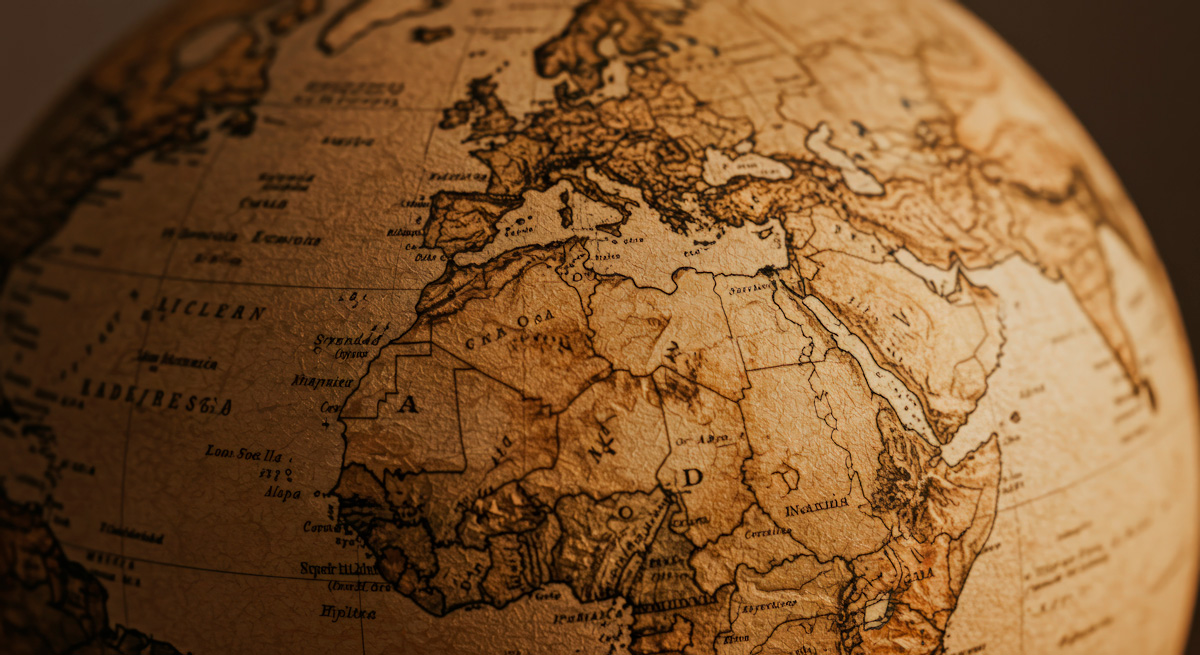
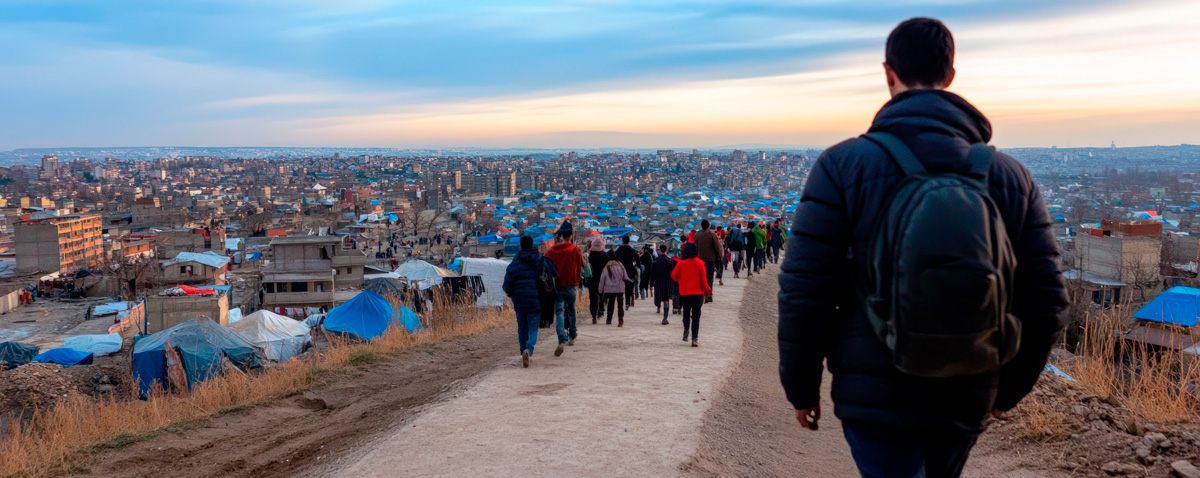
Sometimes books take you in an unexpected direction. I started reading Thomas Friedman’s From Beirut to Jerusalem, expecting insights into a region I was already familiar with. Yet as I read this 1989 book, my attention turned less to a political settlement of the Arab-Israeli conflict than to the economies that might emerge under different political arrangements. As an economist, I found myself asking: what would everyday economic life look like in each?
The answer may depend partly on how far into the future households and firms are willing to commit their capital, savings and labor to a place, and how reversible those commitments are. Under persistent conflict, economic horizons shorten and liquidity becomes valuable. Under credible peace, longer horizons encourage fixed investment. Under fragile stability, people may invest in the future, but only while retaining the option to exit. These different horizons produce three very different economies.
Scenario I. Persistent conflict and the island economy
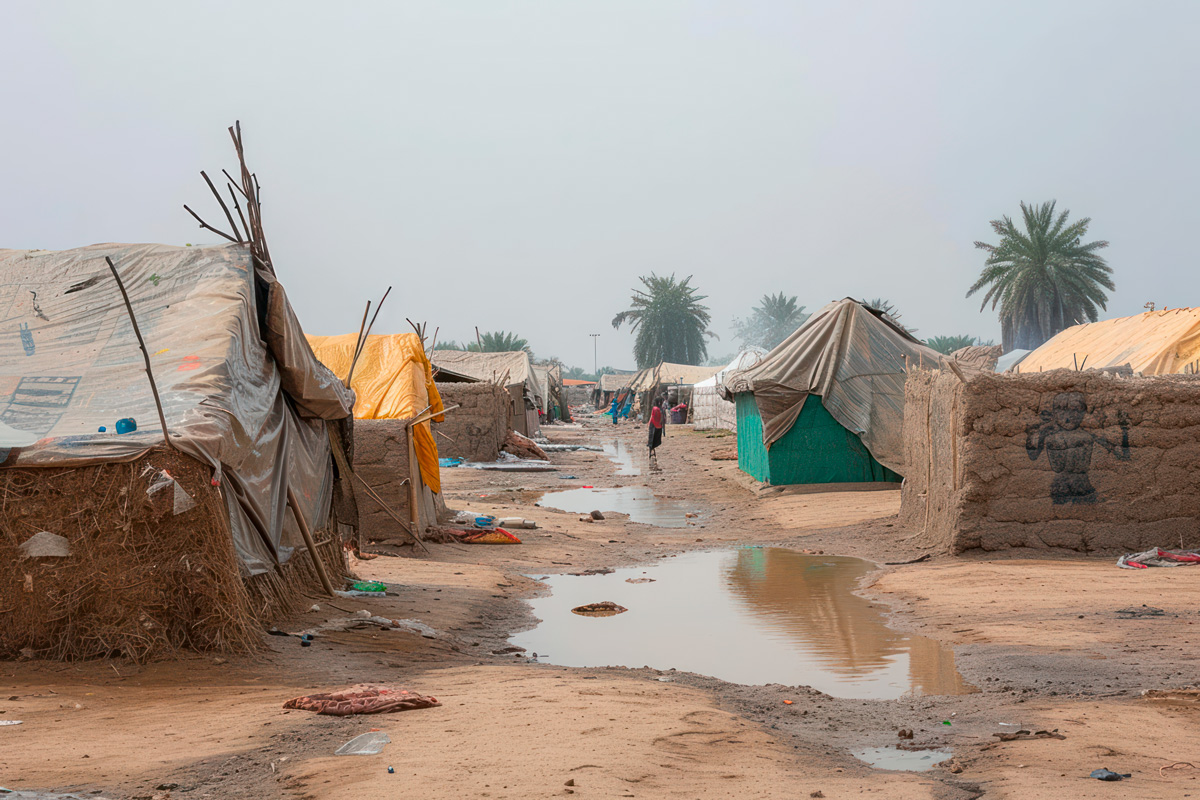
In this scenario, armed confrontation persists and increasingly powerful non-state actors challenge the territorial and political coherence of existing nation states. Much of the Middle East continues with normal life, while pockets of conflict break into local island economies, separated by checkpoints beyond which security risks remain high. Supply chains reroute. People trade within networks they trust. Shortages are rampant, but people improvise. Inside the most contested islands, violence becomes part of everyday life. Some territories may fall under occupation, Israeli or otherwise, while others limp on. People nevertheless try to go about their normal lives.
The result is not one uniformly depressed economy. Extreme spatial segregation emerges between war zones, contested border territories and comparatively safe enclaves.
In the most insecure territories, capital flows out. Formal businesses close, banks stop lending and insurance becomes prohibitively expensive. Infrastructure deteriorates, property values collapse, skilled workers leave and the tax base disappears. The quality of life deteriorates badly. Households turn to informal commerce, remittances and humanitarian aid, sometimes relying on the economic networks sustaining armed organizations. Poverty and insecurity reinforce one another, and long-term plans give way to the need to preserve liquidity.
Despite it all, the Middle East will still have areas that are friendly places to visit. Capital does not necessarily leave entire countries; it moves away from dangerous pockets. People with money do the same. Firms relocate. Construction follows them, as do restaurants, schools, hospitals, offices, retail and housing. Economic stability in these enclaves can bring a surge in property prices and rents. Diaspora money generates its own demand for reconstruction and investment. Traders become extraordinarily good at rerouting goods around danger, while entrepreneurs learn to price political risk into everyday decisions.
Yet many of the island economies in contested territories remain economically unviable. However resourceful their populations become, improvisation cannot generate sufficient jobs and investment, nor reproduce the productive foundations of a viable national economy. Aggregate national indicators therefore conceal radically different economic realities within the same country.
Scenario II. Peace, integration, and the economy of commitment
Here the region moves forward on the back of a peace process that brings inclusion and regional integration. A contagion of can-do optimism replaces fear in the streets, and architects unfurl plans to reconstruct areas savaged by war. Peace agreements restore confidence. People save, firms invest and families buy homes. Banks lend against longer streams of anticipated income. People acquire education that may pay off years later. Households become more willing to lock savings into homes and pensions, while businesses acquire machinery, technology and factories. The economy begins to organize itself around long-term commitments rather than survival.
Politics does not necessarily become liberal or unconstrained. Governments may still manage political tensions firmly, whether to protect the settlement from armed groups or to contain dissent and maintain their rule. Economies, meanwhile, may be managed with a relatively liberal stance, with a growing commitment to diversification and attracting talent. The ambition is to create an environment where diverse people can live, work and collaborate productively. Trade, tourism, investment, shipping and world-class airlines connect the Middle East to almost every other part of the world. Regional markets become woven into global markets along major trading routes, while professional services follow capital. New partnerships emerge, including some that would previously have been politically unthinkable.
As barriers to exchange fall, firms can organize production around larger regional and international markets. Greater market size encourages specialization and scale, while better infrastructure reduces trading costs and makes further investment profitable.
Integration also begins to alter the social geography inherited from conflict. Businesses recruit according to skills. People move toward jobs, schools and opportunities, encountering one another through workplaces and neighborhoods rather than primarily through political or religious institutions. Geographic segregation may persist, but economic opportunity makes the boundaries between communities more permeable.
Nation states regain their ability to administer complex needs. Staffed with modernizing bureaucrats, public institutions replace some of the private and communal substitutes that emerged under fragmentation. Rather than households improvising around institutional failure, the state lowers the cost of economic coordination for everyone.
Scenario III. Fragile stability and the economy of options
This is a no war, no peace scenario in which the region is only seemingly stable. Religious, ethnic and sectarian groups seek their own piece of home within what appears to be a modern nation state. Without the consensus needed for such a polity, they govern through uneasy negotiations and compromises, often under a softer form of authoritarianism. Their followers fear what might happen if the precarious balance is disturbed.
In this economy, individuals favor investments they can quickly reverse over ventures that might maximize wealth in the long term. Unlike in persistent conflict, investment remains possible but only with a credible option to exit if banks fail or fixed assets become stranded. Savings are less likely to be reinvested or intermediated by banks and financial institutions. Businesses remain small and concentrated in trade and services. Capital formation slows, and productivity stalls. Entrepreneurship becomes an increasingly attractive alternative to conventional salaried employment, as individuals shift from selling their labor to building ventures around their skills and networks. Digital technologies make this easier, providing affordable ways to work around institutions that do not function.
With a definitive peace settlement still elusive, one possible response is a broadly supported regional institution that coordinates negotiations and gives affected populations an internationally recognized forum to articulate their demands for peace and self-determination. If it mobilizes a critical mass of support and gains recognition as a legitimate representative of those seeking peace, it could draw on sponsoring states, international donors, diaspora contributions and development-bank financing. Its programs might cover humanitarian assistance, welfare payments, reconstruction, education and scholarships, healthcare, employment and infrastructure. Such an institution would create its own economy of salaries, procurement, grants and services. But that economy could remain narrow and donor-dependent if the income generated does little to support exports and private investment.
These scenarios are not forecasts, nor need they exist neatly in isolation. Different territories may display elements of all three. Their usefulness lies instead in identifying how political uncertainty changes economic behavior.