A Conversation with Shanta Devarajan on Conflict and Development
What follows is a conversation with Shanta Devarajan, Professor of the Practice of International Development at Georgetown University and former Senior Director for Development Economics at the World Bank.
Omer Karasapan: From Ukraine to the Middle East and the Sahel, interstate tensions and proxy conflicts increasingly appear intertwined with longstanding civil wars and fragile states. Why does fragility today seem once again tied to interstate conflict rather than primarily to the non-state conflicts that dominated the post-9/11 era?
Shanta Devarajan: If you look at the period after World War II — and especially after 1989 — there was a dramatic decline in interstate conflict. Earlier eras had been defined by wars between states, but over time those gave way increasingly to intrastate conflicts: civil wars between governments and non-state actors, or among non-state groups themselves.
So fragility itself did not disappear. In fact, it increased. What changed was its composition.
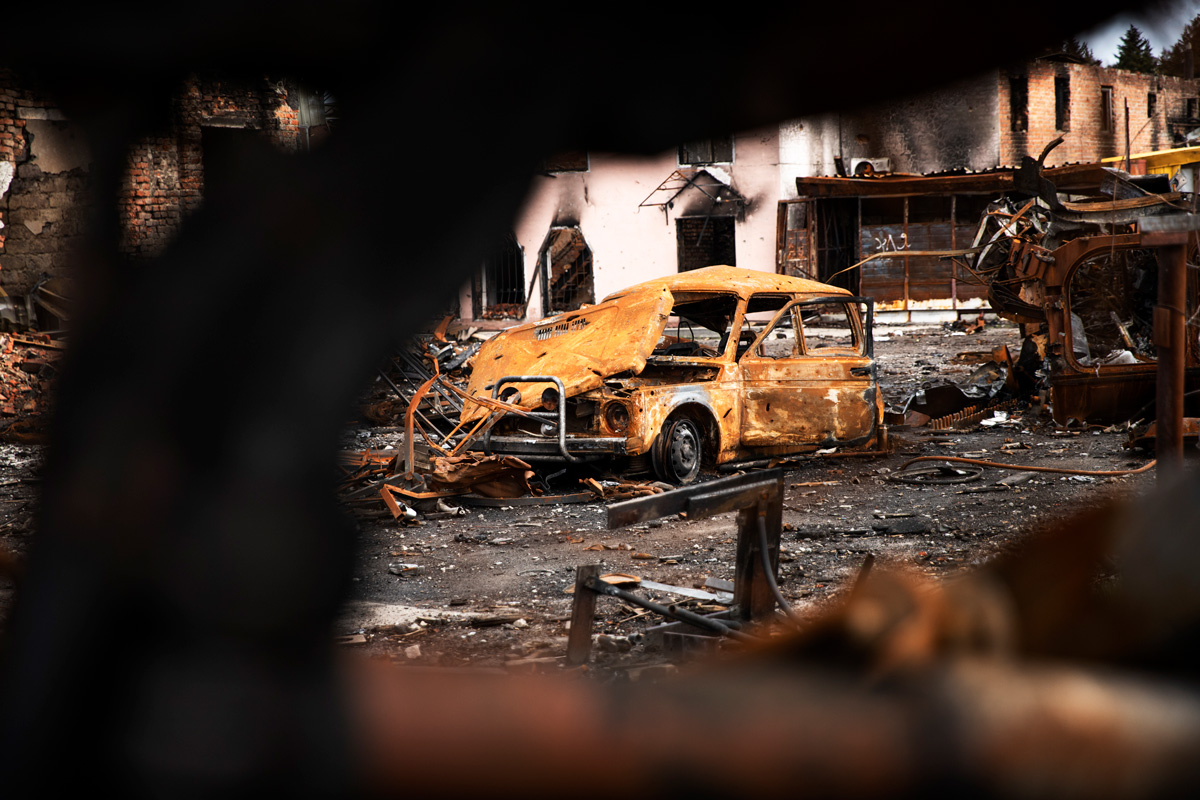
The watershed moment, in my view, was Russia’s invasion of Ukraine in February 2022. For decades, there had been a broad — if imperfect — acceptance of the postwar international order. Countries generally saw maintaining peace as being in their interest. The invasion of Ukraine fundamentally challenged that framework. Here was one sovereign country openly invading another sovereign country, effectively signaling that the old order no longer constrained state behavior.
What makes the current period particularly dangerous is that the rise in interstate conflict has not replaced civil wars; it has been layered on top of them. Conflicts in the Sahel, the Middle East, Sudan, and elsewhere have continued, while the weakening of the international order has also increased the possibility of interstate confrontation elsewhere. At the same time, many civil wars have increasingly become proxy wars. Yemen is the clearest example, but we also see this in Libya, Sudan, and parts of the Sahel. External powers pursue regional influence through local conflicts. In many ways, that has become a defining feature of fragility today.
Omer Karasapan: As you said, we seem to be entering a period of greater instability, where the old order is fading but a new one has not yet emerged. Yet once countries become fragile, they often remain trapped in fragility for decades, sometimes generations. Why is fragility so persistent?
Shanta Devarajan: We should stop thinking of fragility as an event and instead think of it as a syndrome — more like a chronic condition. Once a country enters fragility, it becomes very difficult to exit.
One reason is that the period immediately after conflict is often the most dangerous. Paul Collier famously estimated that within ten years of a civil war ending, the probability of conflict recurring is about 50 percent. We also observed that roughly 90 percent of new conflicts in the 2000s occurred in countries that had already experienced conflict before.
That tells us fragility is not simply about violence itself. Violence is a symptom of deeper dysfunctions within society — ultimately a breakdown in trust. And trust is extraordinarily difficult to rebuild. There’s a Dutch proverb: “Trust arrives on foot and leaves on horseback.” That is exactly what we see in fragile states.
Even after wars formally end, the underlying grievances, fears, and institutional weaknesses often remain unresolved. In Sri Lanka, for example, nearly two decades after the civil war ended, debates over autonomy, decentralization, and political identity remain deeply contested.
So fragility is fundamentally a long-term political and social challenge.Shanta Devarajan: We should stop thinking of fragility as an event and instead think of it as a syndrome — more like a chronic condition. Once a country enters fragility, it becomes very difficult to exit.
One reason is that the period immediately after conflict is often the most dangerous. Paul Collier famously estimated that within ten years of a civil war ending, the probability of conflict recurring is about 50 percent. We also observed that roughly 90 percent of new conflicts in the 2000s occurred in countries that had already experienced conflict before.
That tells us fragility is not simply about violence itself. Violence is a symptom of deeper dysfunctions within society — ultimately a breakdown in trust. And trust is extraordinarily difficult to rebuild. There’s a Dutch proverb: “Trust arrives on foot and leaves on horseback.” That is exactly what we see in fragile states.
Even after wars formally end, the underlying grievances, fears, and institutional weaknesses often remain unresolved. In Sri Lanka, for example, nearly two decades after the civil war ended, debates over autonomy, decentralization, and political identity remain deeply contested.
So fragility is fundamentally a long-term political and social challenge.
Omer Karasapan: That leads directly to the role of the international community. What do external actors consistently misunderstand about fragility?
Shanta Devarajan: Before asking what the international community is doing wrong, we should first ask whether it is doing enough at all.
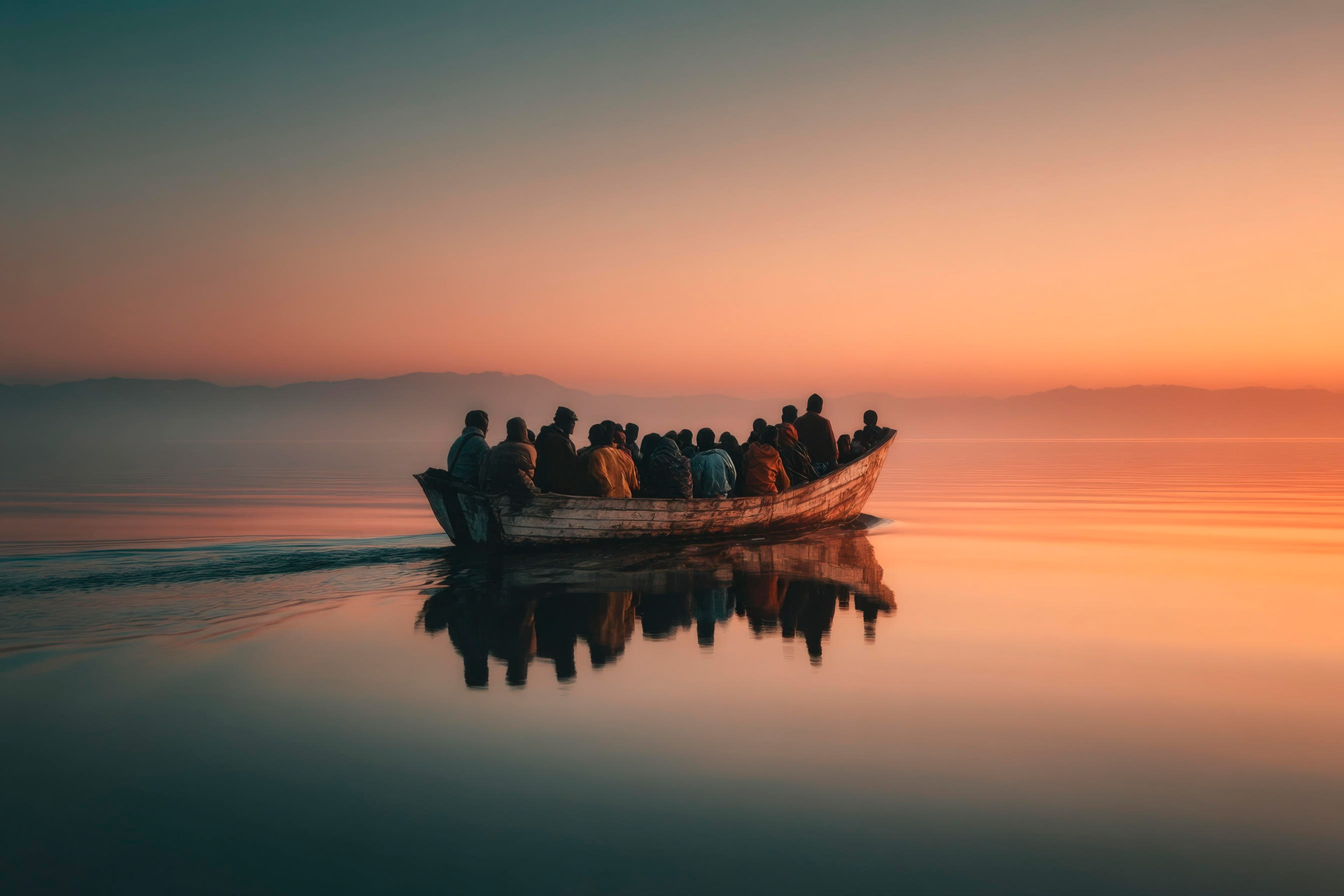
For a long time, many civil wars — especially in Africa — were treated as distant problems. Policymakers in Washington or Geneva often saw them as local crises with limited relevance to the rest of the world. But these conflicts are global public bads. A civil war in Syria does not stay in Syria. It generates refugee flows, regional instability, terrorism, and economic spillovers far beyond its borders.
Too often, the international community only reacts once the crisis has already exploded — for example, when refugees begin arriving in Europe. By then it is usually far too late.
And even when interventions do occur, they can sometimes worsen fragility. One example is the tendency to push for rapid elections immediately after ceasefires or peace agreements. I saw this repeatedly in countries like DR Congo and Zimbabwe.
The logic sounds reasonable: restore democracy quickly. But elections guarantee one thing — someone wins and someone loses. If the losing side was fighting a civil war only months earlier, defeat can feel existential. Rather than consolidating peace, elections can intensify insecurity and deepen mistrust.
In these environments, political competition can easily become a struggle to capture the state before someone else does.
Omer Karasapan: So how should international actors think differently about post-conflict recovery?
Shanta Devarajan: Let me give you the example of Liberia after the civil war.
Ellen Johnson Sirleaf had been elected president and donors were prepared to support reconstruction. But there were also widespread concerns about corruption inside the state. Donors wanted safeguards on how funds would be used.
The solution they arrived at was extraordinary: they effectively installed a foreign official with signature authority over public expenditures — in practice, something very close to a foreign finance minister.
Now think about the tension embedded in that arrangement. Liberia was trying to rebuild sovereignty and national trust after a devastating civil war, yet a key function of state authority had effectively been externalized. At one level, donors felt this was the only way reconstruction funds could be protected. But at another level, it created enormous political tension and raised profound questions about sovereignty and legitimacy. Those tensions are still debated in Liberia today.
Omer Karasapan: How does this relate to institutions like the World Bank and the broader Fragility, Conflict, and Violence agenda?
Shanta Devarajan: One important lesson is that institutions like the World Bank need to speak more openly about governance failures, even when governments are uncomfortable with that scrutiny.
The Arab Spring is a classic example. Before 2011, countries like Tunisia and Egypt were widely praised for strong economic growth, poverty reduction, and macroeconomic performance. Yet beneath those indicators were deep governance problems — cronyism, corruption, exclusion, and repression.
The international community often knew these problems existed, but tended to downplay them because the macroeconomic story looked successful. That created what I call the “cost of denial.” Citizens experienced these governance failures every day, while outsiders continued celebrating growth. Eventually the resentment boiled over. And once fragility erupts, rebuilding becomes extraordinarily costly and prolonged.
Omer Karasapan: You have also argued that even technically sound macroeconomic reforms can become politically destabilizing in fragile settings.
Shanta Devarajan: Yes. If you look at FCV strategies — not only at the World Bank, but also at the IMF — the diagnostics are often very sophisticated. But when you get to the policy prescriptions, they frequently revert to standard macroeconomic recommendations: reduce deficits, cut subsidies, raise taxes, restore fiscal balance.
Economically, those policies may make sense. But timing matters enormously.
Imagine a society emerging from ten or fifteen years of civil war, where people have already endured enormous hardship. Is that really the moment to sharply raise fuel prices or remove subsidies?
I spent years advocating subsidy reform in the Middle East, so I understand the economic logic. But fragile states are politically combustible environments. Policies that might be manageable elsewhere can become explosive there.
The Yemeni civil war, for instance, escalated immediately after fuel prices were raised under an IMF-supported reform program. One has to ask whether macroeconomic orthodoxy sometimes underestimates political fragility.
Omer Karasapan: The world today appears both more fragile and less willing to commit resources to fragile states. Development assistance is declining across many donors, while geopolitical tensions are rising. How should institutions respond?
Shanta Devarajan: Withdrawal is not an option.
These are some of the deepest and most consequential problems facing the world today. If institutions disengage because fragile states are difficult or risky, the costs eventually spread far beyond those countries themselves.
In fact, I would argue that institutions like the World Bank should be stepping up rather than stepping back. The Bank has resources, expertise, and convening power that remain critically important.
At the same time, fragile states require a different mindset. We should not evaluate engagement in fragile environments using the same criteria we apply elsewhere. Fragility is inherently uncertain. Some interventions will fail. But avoiding risk altogether guarantees failure.
In many ways, engagement in fragile states should resemble venture capital: you take risks because the alternative is stagnation. Putting very small amounts of money into deeply fragile environments is often ineffective by definition. What matters is thoughtful engagement, calibrated to local realities and supported by people inside the country who genuinely want reform.
Omer Karasapan: It is difficult not to feel pessimistic when looking at the world today. Yet disengagement clearly cannot be the answer. Whether through financing, knowledge, or institution-building, the challenge is how to do better with fewer resources and greater instability.
Shanta, thank you very much for joining us. This was a rich and deeply illuminating conversation.
Shanta Devarajan: Thank you. I’m honored to be part of it.