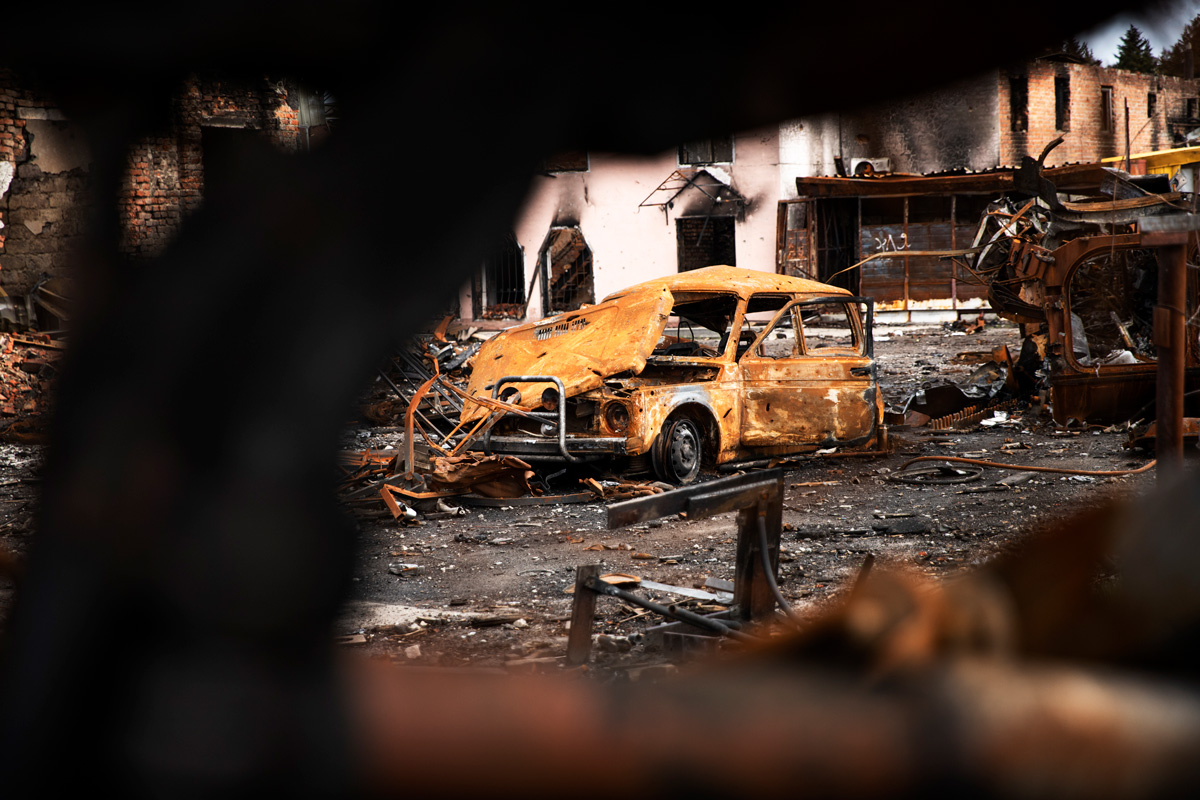
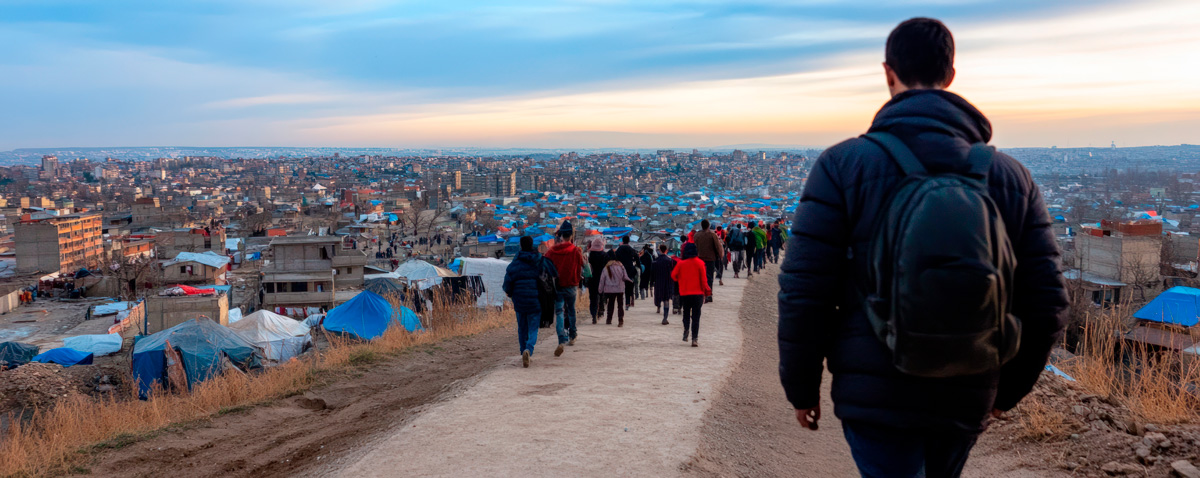
After fifteen years of civil war, in the early 1990s, Lebanon adopted a real estate–led recovery strategy for Beirut’s downtown through Solidere. Infrastructure was rebuilt, the waterfront redeveloped, and private capital mobilized to restore the city as a regional financial hub.
In 2006, war struck again. Reconstruction resumed. Regional partners and diaspora flows financed the rebuilding of roads, bridges, and neighborhoods.
Yet by 2019, Lebanon faced one of the deepest financial crises in modern history. Public debt was unsustainable, banks failed, and output contracted sharply. The economic collapse was as deep and prolonged as many episodes of wartime destruction.
Across the Middle East, this pattern is familiar: Cities are rebuilt. They do not recover. Replacing assets does not automatically repair the economic systems beneath them. Why do recovery strategies so often default to real estate–led reconstruction rather than institutional reform?
Why a reconstruction-first approach fails
Politically, nothing says “recovery” like new construction. Visible projects signal progress, attract financing, and generate political credit. Institutional reform is slower, less visible, and often politically costly. In fragile states, governments and donors gravitate toward what can be built quickly rather than what must be restructured patiently.
Reconstruction without systemic reform, however, rarely endures. After 2003, Iraq spent more than $220 billion on reconstruction, yet electricity supply remained erratic and water systems unreliable. A 2019 World Bank assessment concluded that projects were built “without ownership,” stalled by governance gaps and weak operations.
Elsewhere, in Bosnia and Herzegovina, roughly 43 percent of reconstructed homes remained unoccupied because displaced residents did not return. Infrastructure without economic reintegration produces empty buildings, not recovery.
These experiences suggest that reconstruction-first approaches suffer from three weaknesses:
- Reconstruction is backward-looking: It aims to restore a pre-war equilibrium that was often economically distorted and institutionally weak.
- Recovery is treated as an engineering problem: Funds flow to visible assets, not to system-building. Institutions, incentives, and maintenance are often afterthoughts.
- Communities are assumed to behave according to a blueprint: People have agency, and ignoring this can derail plans. When trust is broken, top-down plans fail easily.
Lasting recovery requires redesigning the economic architecture — restoring incentives, institutions, and the social contract. That demands a forward-looking strategy.
The Middle East now faces reconstruction needs on a scale far larger than Lebanon’s in the 1990s. In Syria, GDP remains less than half its pre-war level. At current World Bank projections of 1 percent growth in 2025, it would take the country 70 years to merely recover its pre-war GDP. In Gaza, destruction exceeds annual output. In Sudan, output has fallen by nearly 40 percent in two years. In all these cases, without a systemic shift, rebuilding risks entrenching fragility rather than reversing it.
Seven imperatives of a transformative recovery strategy in the Middle East
If reconstruction restores the past, recovery must redesign the future. In the Middle East’s fragile post-conflict economies, recovery is necessarily a second-best exercise. A transformative strategy must therefore rest on seven principles:
- Pursue systemic recovery, not just reconstruction. Recovery must rebuild both assets — infrastructure and human capital — and the systems that govern them: institutions, markets, and communities. Without rules and coordination, even well-funded projects fail. Build the ecosystem, not just the trees.
- Set explicit objectives. Governments must decide what they are maximizing and at what cost. If the goal is to revive local economies in warzones, invest locally even at efficiency loss to preempt future violence. If the goal is national GDP growth, support labor mobility and private investment where returns are highest.
- Recognize tradeoffs between interventions. Every dollar has an opportunity cost. A project that “helps” is not enough — what matters is whether it delivers the highest impact among alternatives.
- Take uncertainty into account: no-regret vs. contingent policies. In volatile settings, “no-regret” investments — education, health, decentralized energy — pay off regardless of political outcomes. Large, centralized networks should wait until governance thresholds are met. Sequencing is a hedge against renewed instability.
- Work around bottlenecks through bottom-up channels. When central authority is contested and trust is in short supply, empower capable local governments and community-level delivery. Cash transfers can outperform state-led interventions in high-corruption environments.
- Respect agency: let people and businesses self-sort. War scatters populations against their will; recovery must restore choice. Property rights, legal IDs, and labor mobility enable households to rebuild where they find opportunities, not where planners want them.
- Think beyond borders. Recovery cannot happen in isolation. Trade corridors, energy grids, and labor mobility link national recovery to regional stability. Cross-border cooperation multiplies the returns to peace.
Together, these principles reject the illusion that reconstruction alone can generate recovery. In fragile states, sustained growth depends less on concrete than on incentives, institutions, and credible governance. Without that shift, rebuilding risks recreating the fragilities that preceded conflict.
Rolling out a recovery strategy
Each country faces unique constraints, but the logic of action is similar: establish a credible and feasible strategy; begin with no-regret actions; prepare contingent reforms; then sequence investments as governance improves.
Economic recovery is not a list of projects. It is the restoration of an ecosystem of opportunity — the rules, rights, and institutions that allow firms to invest and people to prosper. Physical reconstruction without that enabling framework breeds dependency and fragility.
Wars have destroyed infrastructure in MENA — but they have also stripped people of their agency. Recovery must return it.